
Making decisions about your dental health can often feel overwhelming, especially when you are suddenly faced with the reality of a missing tooth. Whether you lost a tooth due to an unexpected injury, severe decay, or prolonged gum disease, you likely have a rush of questions about what to do next. At Shahi Dental Clinic, we believe that an informed patient is an empowered patient. The more you understand about your options, the more confident you will feel in choosing a solution that fits your lifestyle, your budget, and your long-term health goals.
Every day, we consult with patients from all walks of life who are seeking to restore their complete smiles. Over time, we have noticed that the same critical questions consistently arise. To help you navigate your restorative journey with absolute clarity and peace of mind, we have compiled this comprehensive guide answering the most frequently asked questions about replacing missing teeth.
1. What actually happens if I choose not to replace a missing tooth?
This is perhaps the most common question we hear, especially if the missing tooth is in the back of the mouth where it isn’t immediately visible. Many patients wonder if they can simply leave the gap empty. The straightforward answer is: ignoring a missing tooth will almost certainly lead to more complex and expensive dental issues down the road.
Your teeth are designed to work together as a unified system, supporting each other in a tight, balanced arch. When a tooth is removed, that structural integrity is compromised. The healthy teeth adjacent to the empty space will gradually begin to shift, tilt, and drift into the gap. The tooth on the opposing jaw will also begin to erupt outward since it no longer has a partner to bite against. This shifting throws off the alignment of your entire bite, leading to uneven wear on your enamel, difficulty chewing, and severe strain on your jaw joints (TMJ), which can cause chronic headaches.
Furthermore, the jawbone underneath the missing tooth will immediately begin to resorb, or melt away, due to a lack of mechanical stimulation. Replacing the tooth promptly is the only way to halt this destructive domino effect.
2. Am I too young—or too old—to get my teeth replaced?
Tooth loss does not discriminate by age, and thankfully, neither do modern restorative treatments.
For younger, highly active patients, missing a tooth can be a massive blow to confidence. As discussed in our previous guides, younger patients typically shy away from removable dentures because the acrylic plates can be irritating and the daily maintenance can feel embarrassing or cumbersome. For young professionals and students, fixed solutions like dental bridges or dental implants are overwhelmingly the preferred choice because they offer a permanent, natural-feeling restoration that doesn’t disrupt an active lifestyle.
On the other end of the spectrum, older patients often assume that they are “too old” to invest in premium solutions like implants and default to removable dentures. While dentures are a fantastic, budget-friendly choice, age itself is rarely a disqualifying factor for implants. As long as you have adequate jawbone density and are in reasonably good overall health, you are likely a candidate for a fixed, implant-supported restoration. We have successfully placed implants in patients well into their 70s and 80s, drastically improving their quality of life.
3. Be honest: Is getting a dental implant a painful surgery?
We hear the fear in our patients’ voices when they ask this question. The word “surgery” conjures up images of intense pain and lengthy hospital stays, but implant dentistry is nothing like that. In fact, most of our patients are shocked by how comfortable and routine the procedure actually is.
At Shahi Dental Clinic, the placement of a single dental implant is a minimally invasive, highly precise procedure that is typically completed in about 30 to 45 minutes right in our dental chair. We utilize advanced local anesthesia to ensure the area is completely numb; you will feel some mild pressure, but absolutely no sharp pain.
Because the implant is placed precisely into the bone where the previous root lived, the trauma to the surrounding gum tissue is minimal. Post-operative discomfort is generally very manageable, often requiring nothing more than over-the-counter pain relievers for a day or two. Many patients tell us that having the implant placed was significantly easier and less painful than having the original tooth extracted!
4. How long does the entire dental implant process take?
While a dental implant provides a lifetime of benefits, it is not a one-day process. It requires patience to ensure optimal biological success.
The first step is the surgical placement of the titanium post into your jawbone. After this, we enter the healing phase, which is critical to the success of the implant. Over the next 3 to 4 months, your natural bone will grow around and fuse to the microscopic grooves of the titanium post in a process called osseointegration.
During this healing period, you will not have an empty gap; we can provide a temporary aesthetic solution so you can go about your normal life. Once the bone has fully integrated with the implant, you will return to the clinic, and we will attach the permanent, custom-crafted ceramic crown. While the entire timeline spans a few months, the actual time spent in the dental chair is remarkably brief.
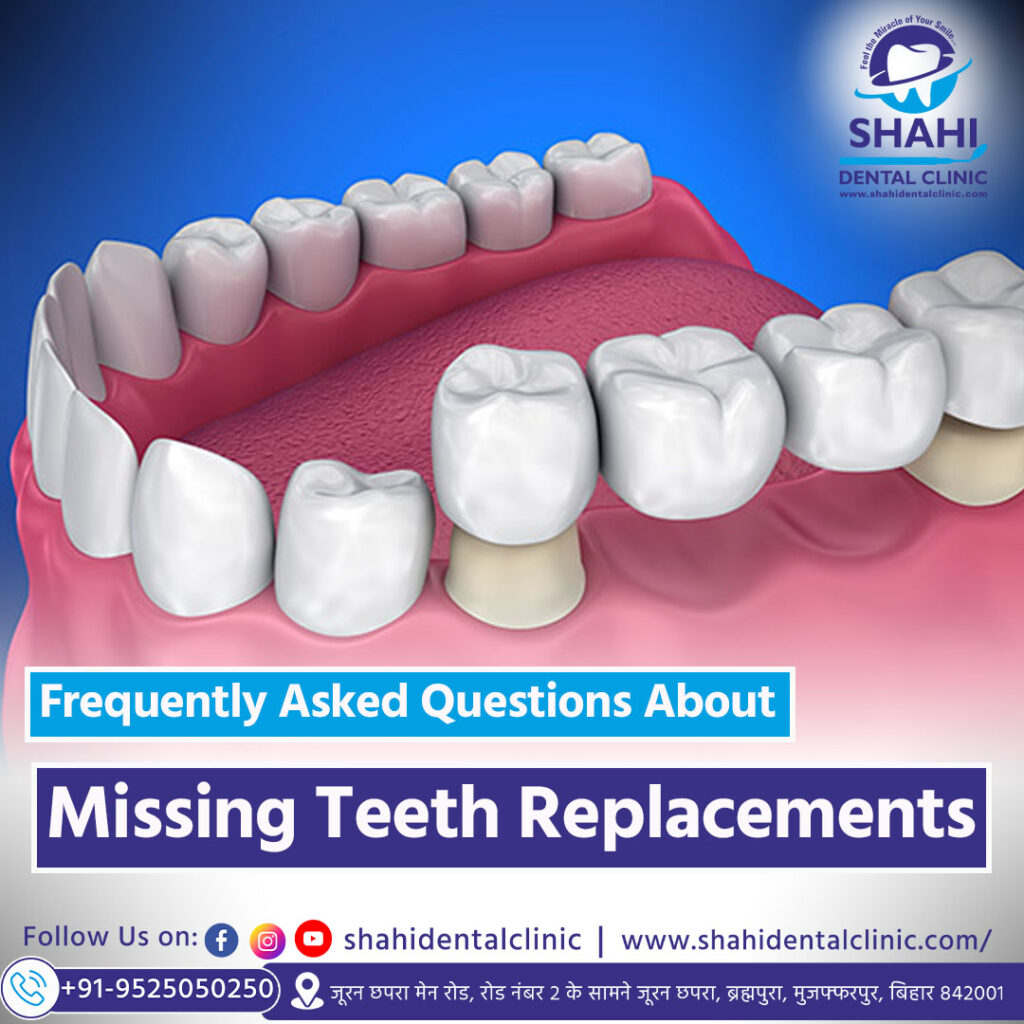
5. Why do dentists have to alter healthy teeth to place a dental bridge?
A fixed dental bridge is an excellent, permanent way to replace a missing tooth, but its structural design requires support from the surrounding environment.
A bridge literally bridges the gap between two existing teeth. To hold the prosthetic middle tooth securely in place, the bridge features hollow crowns on either end that slip over your natural teeth. For these hollow crowns to fit seamlessly without looking incredibly bulky, the natural “anchor” teeth must be reduced in size. We have to carefully shave away a layer of healthy enamel to create enough room for the bridge to seat properly.
While this is a highly successful and standard procedure, it does mean permanently altering healthy biological tissue. If you prefer a more conservative approach that leaves your neighboring teeth completely untouched, a standalone dental implant is the superior alternative.
6. Are removable dentures a bad choice?
Absolutely not. Removable dentures have been used successfully for decades and remain a vital tool in restorative dentistry. They are highly effective, non-invasive, and represent the most budget-friendly option for replacing missing teeth.
However, it is important to have realistic expectations. Because dentures rest on the surface of your gums, they do not provide the same bite force as a fixed bridge or an implant. They require a period of adaptation, and they must be removed daily for proper cleaning. They also do not prevent the jawbone resorption that occurs after tooth loss. They are an excellent solution for many patients, but those seeking maximum stability and bone preservation typically opt for fixed alternatives.
7. Which tooth replacement option is the most cost-effective?
Cost-effectiveness depends heavily on your timeline.
- Removable dentures have the lowest initial upfront cost, making them highly accessible. However, because your jawbone changes shape over time, dentures usually need to be relined or entirely replaced every 5 to 7 years, adding to the long-term cost.
- Dental bridges sit in the middle regarding upfront investment. They are fixed and stable, but they have an average lifespan of 10 to 15 years before they may need replacement.
- Dental implants require the highest initial investment. However, because they fuse with your bone and do not rely on adjacent teeth, they boast a success rate of over 95% and are designed to last a lifetime with proper care. When you spread the cost of an implant over 20, 30, or 40 years, it frequently emerges as the most financially sound and cost-effective investment you can make in your oral health.
Take the Next Step Toward Your Complete Smile
Still have questions? We are here to answer them. Restoring your smile is a major decision, and you deserve expert guidance tailored specifically to your clinical needs and lifestyle. Stop letting a missing tooth dictate what you eat, how you speak, and when you smile.
📍 Visit Us: Juran Chapra Main Road, Muzaffarpur
📞 Call/WhatsApp: +91-9525050250
🌐 Book Your Consultation: www.shahidentalclinic.com